

10 ₾
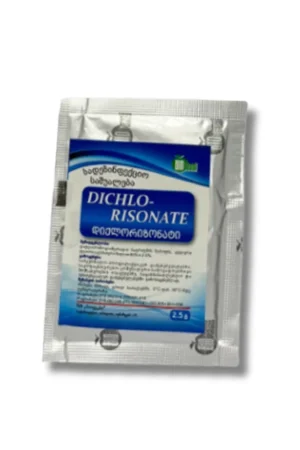
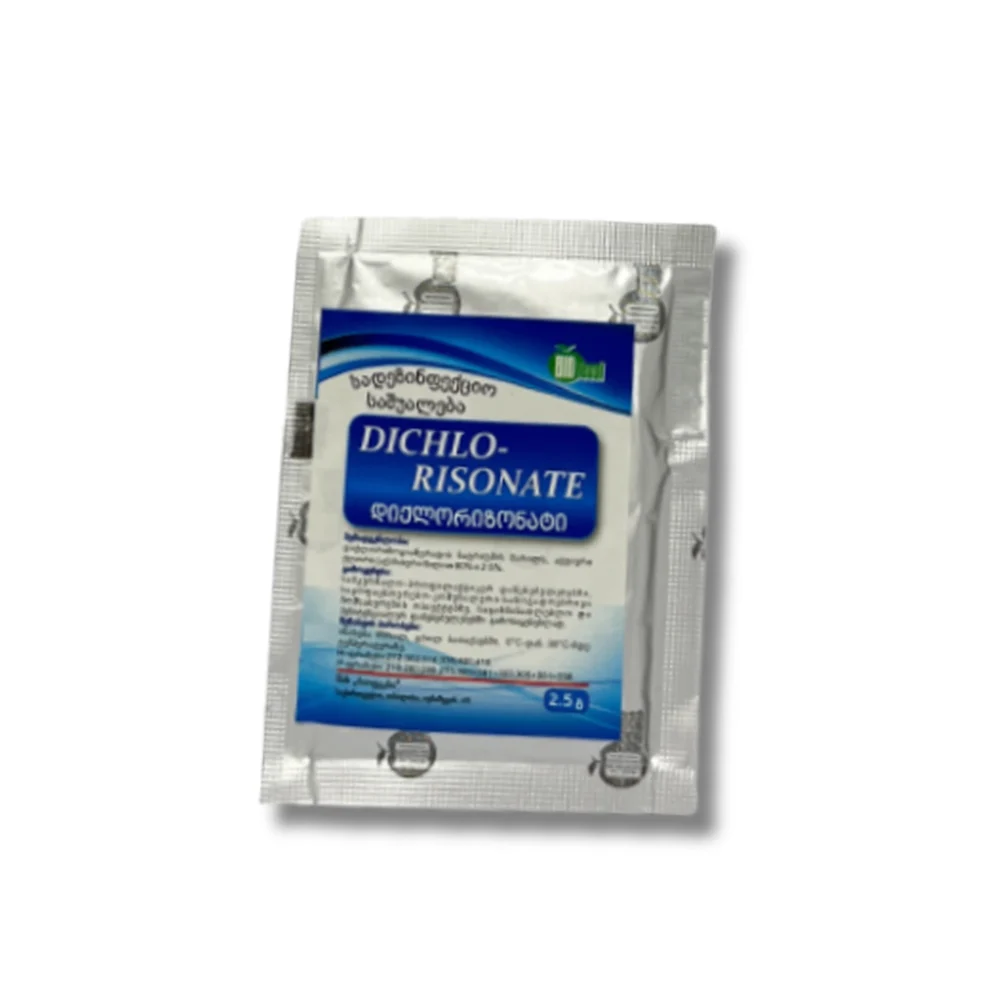
Mangust – biological reptile deterrentWater Disinfectant Agent – Dichlorizonate (DICHLO-RISONATE)
ID: 29017
Stock Status (5+)

About This Product
Dichlorizonate
For the disinfection of drinking and domestic water, swimming pool water, and against water greening and algae growth
Usage
“Dichlorizonate” is intended for:
· Disinfection of drinking and domestic water (in municipalities, urban water supply systems, production, and industry) and swimming pool water, including measures against water greening and algae growth.
Composition
As active ingredients, it contains sodium dichlorisocyanurate salt, with a mass fraction of active chlorine (ac) of 60% ± 2.5%.
Description: The disinfectant is a white powder with a specific chlorine odor.
Spectrum of Action: Bactericidal, virucidal, fungicidal, algicidal.
Method of Use
Dichlorizonate is used for the inactivation of pathogens, specifically for the purification of drinking and domestic water, disinfection of swimming pool water, as well as for measures against water greening and algae growth. See the table for recommended doses and exposure times.
Regimes for Disinfection of Drinking Water and Swimming Pool Water
| Target Object | Dosage per m3 (per 1000 L of water) | Exposure Time, min |
| Drinking Water | ||
| Closed water supply systems – cisterns, tanks, reservoirs, pipelines | 1-2 g | 30 | Individual and group water reservoirs (springs, wells, boreholes) | 5-10 g | 30 | Disinfection of contaminated waters | 7.5-10 g | 30 | Swimming Pools |
| Hyperchlorination upon initial filling | 10-20 g | 12 hours | Maintenance disinfection | 0.5-1 g | 1-2 times a day |
Storage Conditions: Store in dry, cool rooms at temperatures from 0°C to 35°C, separately from medications, away from heating devices and open flames. Keep out of reach of children.
Presentation Form: 2.5 g and 50 g granulated powder
Shelf Life: 3 years in the primary (factory) packaging. Once the hermetic seal of the packaging is breached, the product is valid for no more than 45 days.
Environmental Protection Measures: In case of accidental dispersal, the powder must be collected into containers and subsequently disposed of. Wash away residues with plenty of water; neutralization with acid is not permitted.
Similar Brands